
Five convenience stores leverage fast-food brand partnerships to upgrade food service
Food service has become a key area of competition in the convenience store sector. Beyond giants like 7-Eleven and Circle K, several regional operators have recently accelerated the introduction of food offerings through partnerships with or franchising of fast-food brands. This article highlights five convenience store cases that have drawn attention recently.
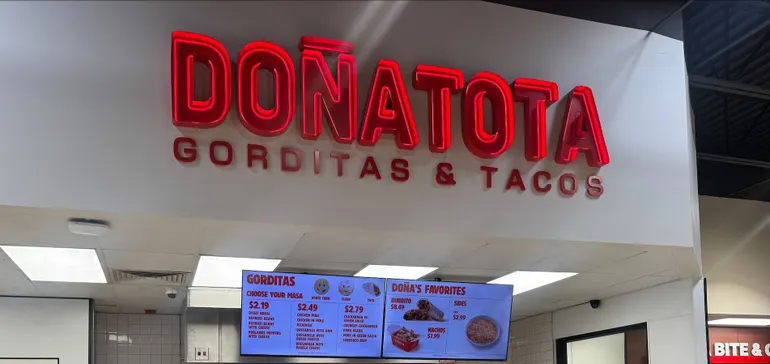
Currently, the strategic position of food service in the convenience store industry is more prominent than ever. Operators are not only committed to developing and promoting their own menus but are also bringing fast food brands into their stores at an extremely rapid pace. This trend includes both on-site collaborations and franchise agreements, with partners ranging from multinational restaurant chains to small regional brands. Regardless of the form of cooperation, the core goal is the same: to make convenience stores more attractive destinations for food consumption.
The industry is already well aware of how large retailers such as 7-Eleven and Circle K leverage fast food brands to enhance their competitiveness. However, recently, a number of relatively lesser-known operators have frequently made headlines for introducing food service formats into their stores. Below is a review of five noteworthy cases from the past few months.
Case 1: Racetrac's partnership with Potbelly
Racetrac recently reached a partnership with the sandwich chain Potbelly to offer Potbelly's food products at some of its locations. This collaboration is seen as a new model for cooperation between convenience stores and fast food brands, aiming to enhance the stores' food service capabilities by introducing a well-known dining brand. According to industry media reports, this partnership may provide new ideas for other convenience store operators.
Case 2: Regional Operator A's franchise attempt
A convenience store operator in the Midwest, referred to as Operator A (specific name undisclosed), introduced a regional fried chicken brand into its flagship store through a franchise arrangement. The operator stated that this move was intended to test the impact of a fast food format on foot traffic and sales, with plans to decide whether to expand to other stores based on the pilot results.
Case 3: Operator B's on-site collaboration
Operator B, located in the Southeast, partnered with a local coffee chain to open a coffee bar inside its store. This collaboration not only offers freshly brewed coffee but also sells baked goods alongside it, aiming to attract morning commuter traffic. The head of Operator B emphasized that when selecting partners, they focus on matching brand style with customer needs.
Case 4: Operator C's multi-brand strategy
Operator C simultaneously introduced two fast food brands across multiple of its stores—one focusing on burgers and the other offering Mexican wraps. This multi-brand strategy aims to cover dining needs at different times of day and leverage the complementarity between brands to boost overall sales. Operator C revealed that it may further expand the number of partner brands in the future.
Case 5: Operator D's pilot project
Operator D recently launched a pilot project partnering with a pizza chain to offer freshly baked pizza in-store. The project adopts a "store-within-a-store" model, where the fast food brand dispatches staff to handle operations, while the convenience store provides the space and infrastructure. Operator D stated that preliminary data shows this model has effectively increased foot traffic during evening hours.
The above cases demonstrate that convenience store operators, regardless of size, are actively exploring partnership paths with fast food brands. Industry analysts point out that behind this trend is the continuous growth in consumer demand for convenient, high-quality dining options, and convenience stores, leveraging their geographic locations and operating hours, are becoming new channels for fast food brand expansion.
It is worth noting that cooperation is not without challenges. Operators need to balance the relationship between their own brands and external brands while ensuring food safety and service quality. Additionally, the franchise model may involve higher initial investment and operational complexity, which operators must carefully evaluate.
As more cases emerge, industry observers expect that cooperation between convenience stores and fast food brands will become more diverse, ranging from simple product supply to deep joint operations, with broad room for innovation. In the future, which models can truly enhance profitability still needs to be tested by the market.