
The 'Revival' of Food Service: How American Supermarkets Are Upgrading Deli and Prepared Meal Businesses
American supermarkets are competing for consumers' dining spending by upgrading prepared foods such as sandwiches and salads, introducing chefs and specialized roles, and optimizing online ordering experiences. Industry data shows that supermarket deli foods are increasingly replacing fast food or fast casual dining.
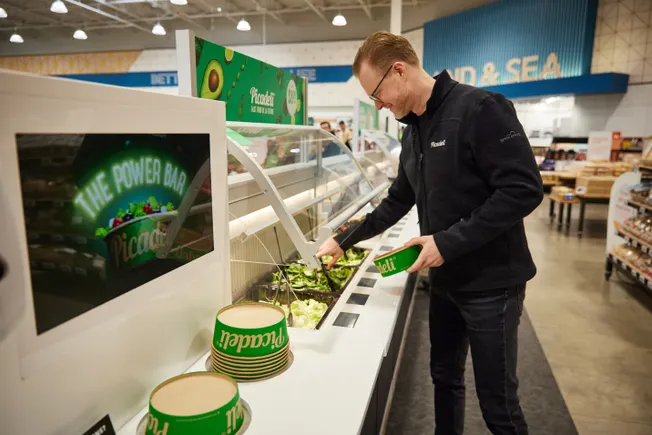
From gourmet sandwiches to pre-made salads, The Save Mart Companies has invested heavily in elevating its prepared foods offerings, said Mark Van Buskirk, the company's senior vice president of merchandising and marketing.
The grocery company, which operates about 200 supermarkets in California and northern Nevada under banners including Save Mart, Lucky, and FoodMaxx, recently overhauled its sandwich program, glass-case salads, and grab-and-go salads, and launched a gourmet sandwich line earlier this year, Van Buskirk said.
The changes are designed to offer consumers a healthy option in addition to the "base program" centered on rotisserie and fried chicken, Van Buskirk said.
"You can come in and get a quality meal at a price point that's more competitive than going to a restaurant," Van Buskirk said.
Rick Stein, vice president of fresh foods at FMI-The Food Industry Association, noted that the association's research shows supermarket foodservice is increasingly replacing meals from fast-food or fast-casual restaurants.
"We are definitely seeing a renaissance in foodservice departments, with retailers investing heavily in departments that many had closed during the pandemic," Stein wrote in an email. "Retailers have invested in chefs and specialized staff, expanded space allocation, and broadened assortments to revive foodservice departments and make them more prominent in consumers' minds."
While some grocers are adding in-store restaurants, food halls, and made-to-order counters, others are focusing on making the quality of their deli and prepared meals rival that of restaurants.
However, with increasing competition from restaurant chains and convenience stores like Foxtrot, supermarkets are seeking differentiation through innovative products, promotions, labor models, and shopping experiences, not just price.

Deli prepared foods capture a larger share of spending
September was a significant month for deli prepared foods, according to Circana research, with strong sales of pizza, soup, and chili indicating that consumers are increasingly choosing these products instead of cooking at home or dining out.
"The strong performance of deli prepared foods is encouraging," said Jonna Parker, leader of Circana's fresh foods team, in a recent report from 210 Analytics. "It reflects the market reality: consumers need a break from cooking occasionally, but in this ongoing balancing act, deli is increasingly winning occasions that would otherwise go to restaurants."
Deli prepared food sales reached $1.9 billion in September, with volume up 0.1% and dollar sales up 2.7% compared to the same period last year, according to Circana data cited by 210 Analytics.
"In today's market, the ultimate value is a combination of price with elements like convenience, health, taste, and experience"—and these are areas where supermarket deli prepared foods already have an advantage, Parker said.
Stein said FMI's research also found that growth in deli prepared foods is being driven by the impact of hybrid work models on consumers' eating habits. Generational shopping habits are also influencing deli prepared food sales.
"We are definitely seeing Gen Z and millennials consuming supermarket deli prepared foods more frequently, and both generations say they expect to increase their foodservice purchases in the future," Stein said.
More than half of shoppers recently surveyed by FMI said supermarket deli prepared foods offer good value compared to dining at fast-food or fast-casual restaurants or ordering takeout, Stein said.
High inflation curbing consumer spending, consumers mixing home cooking with prepared meals, and cooking fatigue are major factors driving heightened interest in prepared foods, Stein noted.

Catering to consumers' demand for meals
ShopRite's "Fresh to Table" concept emphasizes high-quality ingredients in a one-stop meal shop with slogans like "Rah, Rah, Rotisserie" and "Made with love for later."
The newly developed department features ready-to-cook, ready-to-heat, and ready-to-eat options, complemented by private-label items. A ShopRite store in Warminster, Pennsylvania, recently became the seventh location to launch the Fresh to Table concept this year.
Winn-Dixie and Meijer are also pushing ready-to-cook, ready-to-heat, and ready-to-eat options, while Food Lion recently expanded its offerings in upgrades at nearly 50 stores across three North Carolina metro areas, focusing on providing various "affordable and easy meal solutions."
With food prices remaining high, promoting affordability is a key marketing strategy for grocers. For example, a Giant Food store in Washington, D.C., offers deli meal deals in display cases near the entrance and exit, including a $9 salad, a 20-ounce Coca-Cola product, and a bag of chips, or an $8 half-sub sandwich with a drink and chips.
Shoppers are considering more than just price and quality, Stein said; convenience, entertainment, and health and wellness are also factoring into their definition of value.
Limited-time offers—already popular in convenience stores—are another tactic grocers have recently used to spark consumer enthusiasm. For example, Publix sold a Nashville hot chicken sandwich in its deli departments from early April through the end of June.
Grocers are also increasingly focusing on the quality of their offerings. At the Metropolitan Market store in West Seattle, shoppers can build their own fresh poke bowls for $18 per pound. The store's poke bar, located near the checkout, offers a variety of fresh fish, rice, and toppings such as seaweed, cucumber, and wasabi.
Meanwhile, The Save Mart Companies is trying to compete for meal occasions by offering deals and elevating quality. Van Buskirk said its "extensive" hot foods program includes rotisserie chicken, meatloaf, BBQ ribs, chicken pot pie, and hot turkey breast, allowing consumers to bundle purchases.
"I'd put our chicken tenders up against anyone's in the market," Van Buskirk said.
Some grocers are driving meal occasions by emphasizing global flavors. This summer, Meijer called on more food manufacturers to join its Frederik's by Meijer brand, a private-label food line focused on global flavors including frozen and refrigerated meals like pizza, pasta, and Greek feta salad, noting the brand has become a "customer favorite" since launching two years ago.

Other grocers are using technology to innovate their self-serve options. In March, Schnuck Markets introduced a tech-driven salad bar designed by Sweden's Picadeli at a Missouri store. The Picadeli unit features lids that remain closed unless a customer is serving themselves, uses artificial intelligence to track sales patterns to decide when to order products, and has digital labels with product descriptions.
Customers have praised the unit's selection and food safety, Geoff Wexler, Schnucks' vice president of deli and prepared foods, wrote in an email. After receiving an "overwhelmingly positive" response, Wexler said the grocer accelerated its expansion and now has Picadeli "smart salad bars" in 51 Schnucks and Eatwell Market stores.
Exploring successful labor models
Grocers looking to capture the essence of restaurant dining can emulate the staffing models of the foodservice industry.
Wegmans, known for its foodservice, has an executive chef leading the culinary team at each of its stores. Recently opened locations include a 95-person culinary team at its Reston, Virginia, store and a 105-person team at its Alexandria, Virginia, store.

Wegmans' careers website details career paths for its culinary team, including positions such as prep cook, line cook, lead cook, sous chef, and executive chef.
The grocery chain also has culinary management trainee positions for people to learn "how to influence culinary standards while mastering the core recipes, techniques, and other skills needed to become a sous chef."
Similarly, Chicago's Dom's Kitchen & Market uses restaurant terminology in the staffing of The Kitchen, its prepared foods and fresh meal station collective, with titles such as sous chef, said Dom's CEO Don Fitzgerald.
Fitzgerald noted that Dom's recently hired Chef James Klewin, who has over twenty years of culinary experience, as its executive chef and culinary director, and veteran hospitality leader Alain Balandra Uy as its director of hospitality.
Fitzgerald said Dom's wants its culinary and hospitality leaders to bring "the restaurant experience and feel" to their roles and stores, rather than feeling like department managers.
Sam Silverstein and Jeff Wells contributed to this article.