
The core of profit relies on a laminated recipe card: the digital gap in convenience store food service
Food service in U.S. convenience stores accounts for 27.7% to 28.7% of in-store sales, contributing nearly 40% of gross profit, yet operations still depend on laminated recipe cards. The industry is at a critical juncture of transitioning from analog management to digital recipe systems.
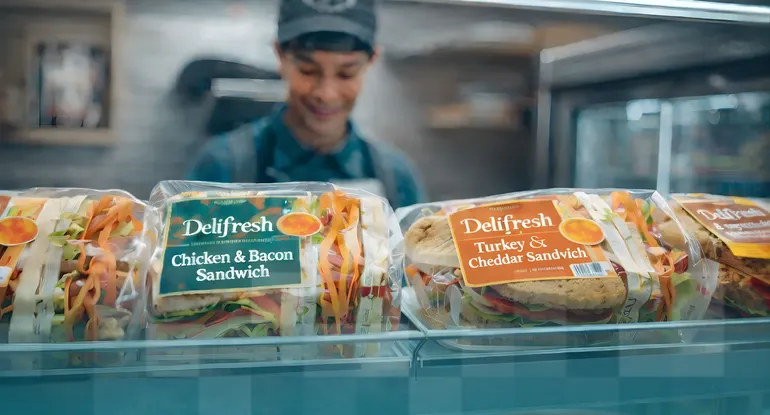
In the U.S. convenience store industry, an overlooked arbitrage opportunity quietly exists.
For decades, the center of the convenience store business has been tobacco, packaged beverages, and fuel margins. Foodservice has long been on the periphery: a hot dog roller, a laminated recipe tucked into a three-ring binder, and a store manager who "by feel" knows how much cheese goes on a breakfast sandwich.
That era is over.
Today, foodservice (including prepared foods, central kitchen products, and dispensed beverages) accounts for 27.7% to 28.7% of in-store sales. Among these, prepared foods alone contribute 72.6% of that category's sales. More importantly, it represents nearly 40% of total in-store gross profit. In other words, the profit engine has shifted.
However, the operating model has not kept up.
Over the past two decades, foodservice's share of in-store sales has grown from 11.9% to nearly triple that. Consumers are responding positively: about 23% of customers purchase fresh prepared foods at convenience stores; more than half (51%) of shoppers believe the quality of convenience store hot food rivals that of fast food or QSR. Chicken tenders, wings, pizza, wraps, breakfast sandwiches—these are no longer experimental items but signature products and brand builders.
But they can also be gross profit traps.
Because in foodservice, a recipe is not a marketing document; it is a financial instrument.
An extra scoop of chicken, half a cup more of sauce, employees operating by sight rather than by weight—each decision seems trivial. But at the scale of 1,000 stores, this evolves into a silent erosion of gross profit. Inventory deviates, and P&L statements become distorted. Operators congratulate themselves on sales growth while gross profit quietly leaks out the back door.
Then there is the turnover issue—annual rates often reach 100% or higher. An employee thawing product at 6 a.m. might be at the register by 8 a.m. and assembling sandwiches by 10 a.m. What guides them? A laminated sheet in a binder, or a standalone screen requiring swipes, completely disconnected from production plans, inventory, and cost realities.
In an industry built on "convenience," we have created inconvenience for our own teams.
Then look at the corporate headquarters level. Headquarters defines recipes in master data systems, then someone re-enters them into PDFs, and then someone else re-enters them into store systems. Multiple versions, multiple "truths," zero systematic execution. There is no direct link between theoretical food cost and what is actually scooped, cooked, or discarded.
Meanwhile, labeling compliance requirements continue to rise. Consumers are increasingly concerned about claims like gluten-free, low-carb, organic, vegan, and locally sourced. Safety risks from mislabeling or undeclared allergens are among the leading causes of severe allergic reactions and recalls. The compliance burden is growing, yet the operating system remains analog.
We are running a modern profit center on 1998 infrastructure.
The question is not whether foodservice is strategically significant—the data has already answered that. The question is whether operators are willing to treat recipes for what they are: the fundamental unit of gross profit.
A digital recipe management system can do three things a binder never could:
- Operationalize consistency. Every preparation step, yield, and portion size is standardized and delivered as a workflow—integrated with production plans, not separate from them. Compliance is measurable, not assumed.
- Establish a single source of truth. One recipe definition flows to labeling, cost modeling, inventory deductions, and store execution. No duplicate entry, no shadow versions, no guesswork.
- Enable near-real-time gross profit visibility. The arbitrage opportunity is here. When ingredient costs change, the impact on theoretical gross profit is immediately visible; when execution deviates, the variance shows up in the data, not just in quarterly reviews. Operators can see which item is a hero and which is a phantom.
Without this visibility, growth can be deceptive. Sales rise, traffic improves, signature items gain word-of-mouth—but gross profit quietly compresses because no one can see the gap between the recipe on paper and the recipe as actually executed.
The most sophisticated convenience store operators already understand: foodservice is not an add-on business; it is the core business. When nearly 40% of total gross profit depends on it, treating recipes as static documents is no longer tenable.
In an industry obsessed with providing speed and simplicity to customers, the next competitive advantage is providing speed and simplicity to the team—whether in stores or in the office.
Winners will not just sell better chicken tenders. They will know in near real time the exact cost of those tenders, how consistently they are produced, and how much gross profit they actually generate.
Recipes are the lifeline of a growing convenience store foodservice operation.
And life, once digitized, is measurable.