
Three Key Data Points: Convenience Stores Accelerate Their Move into the 'Third Space'
Convenience stores are transitioning from the traditional 'grab-and-go' model to the 'third space.' The Paytronix 2026 trend report reveals that 85% of consumers have tried convenience store freshly prepared food, 72% believe it can replace fast food restaurants, and convenience stores with membership programs can see sales increase by over 20%.
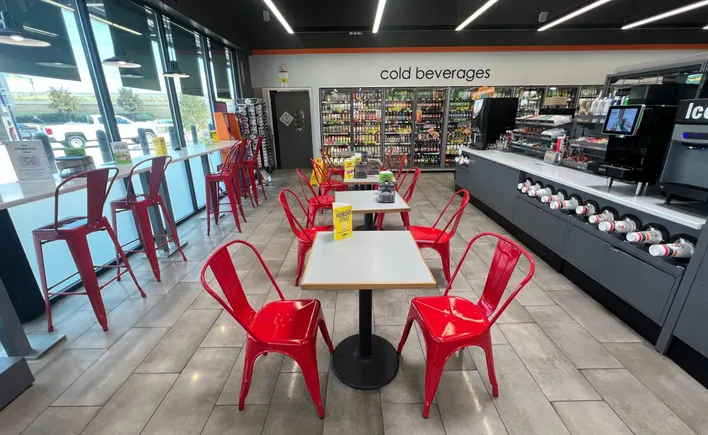
As 2025 draws to a close, we spoke with industry experts who shared their views on the major trends that could shape the convenience store industry this year. One of these trends isthe growing influence of convenience stores as a "third space"—physical places where people gather and spend time.
Traditionally, such places have included libraries, cafes, and community centers. But as foodservice programs become more refined and appealing, convenience stores are actively entering this space.
In this week's "Three Key Data Points" column, we explore how convenience stores are growing into the role of a "third space," based on a recent report from Paytronix.
85%
The percentage of consumers who have tried convenience store freshly prepared food.
The foundation for convenience stores becoming a "third space" lies in introducing freshly prepared food. Without such programs, convenience stores are just quick stops for snacks or drinks—provided customers are willing to enter the store rather than simply stopping at the fuel pump and continuing on their way.
The good news is that, according to Paytronix's 2026 Trends Report, most consumers are willing to try these food programs, with 85% of respondents saying they have tried convenience store freshly prepared food.
Convenience stores are often more flexible than quick-service restaurants (QSRs). The report notes that convenience store retailers saw customer repeat purchase rates "far higher than traditional QSRs in 2025, highlighting their effectiveness in responding to changing dining expectations."
72%
The percentage of consumers who view convenience stores as a fast food alternative.
Having a food program that people are willing to try is one thing, but the report also found that 72% of customers consider convenience store food as an alternative to fast food. This means they not only eat this food but are also willing to visit these retailers for a full meal. This is another step toward becoming a "third space."
We know Buc-ee's has successfully created a "third space" with its massive size, clean environment, and extensive merchandise and food offerings, but most convenience stores are not suited to this model.
Many retailers offer seating areas where customers can relax, chat, and dine. Others lean toward what Paytronix calls "multi-themed spaces"—areas that combine dining spaces with other forms of entertainment.
"Multi-themed spaces create versatility, offering a unique dining environment that attracts a broader customer base," the report states.
Some stores offer televisions for customers to watch, feature pet-friendly areas, or skill-based gaming machines. Rutter's is a prime example, equipped with video game consoles and featuring new store designs that include a sports bar area.
20%
The sales lift convenience stores with freshly prepared food see from loyalty programs.
Once a retailer has built the store, menu, or other amenities that attract customers to enter and linger, the work is not done. It also needs to make as many people as possible aware of what it offers.
There are multiple ways to achieve this, such as special events or traditional advertising. But loyalty programs can also be a powerful tool for attracting customers.
Loyalty programs can drive significant foot traffic and sales for convenience stores. Paytronix's report shows that convenience stores with these tools see sales lifts of 20% or more from their members. Any convenience store that can leverage this power to solidify its position as a gathering and meeting place will be in an excellent position for growth.