
Five Key Questions for the Convenience Store Industry in the Second Half of 2026
Facing fuel supply disruptions and rising costs triggered by the Iran war, as well as the ongoing pressure tariffs and inflation place on consumers and businesses, the convenience store industry in 2026 is undergoing multiple tests. This article raises and analyzes five key issues the industry will closely monitor for the rest of the year, including the transformative impact of 7-Eleven's new CEO Mauricio Leyva, the expansion boundaries of super-regional chains, whether AI technology truly changes operations, the path forward for food programs, and whether consumer confidence can rebound.
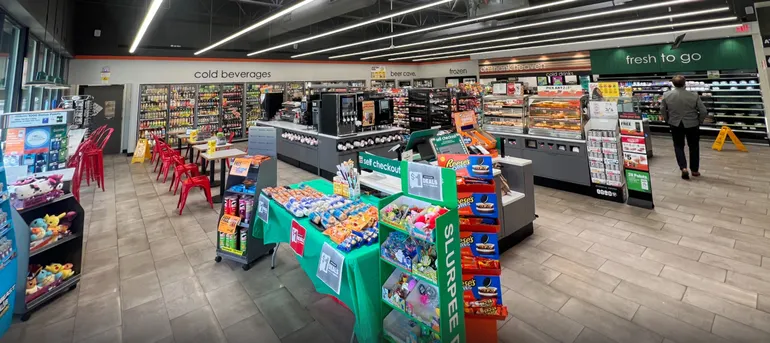
Regardless of the convenience store industry's expectations for 2026, global uncertainty continues to disrupt some established plans. The war with Iran has led to intermittent fuel supply disruptions and pushed up merchandise costs, while tariffs and inflation continue to pressure consumers' and businesses' wallets.
As retailers navigate these harsh realities, we expect the following issues to remain at the forefront of the industry. Here are the five key issues we will focus on for the remainder of this year.
What impact will Mauricio Leyva have on 7-Eleven by the end of 2026?
7-Eleven's new CEO faces a challenging agenda for the remainder of 2026. His priorities include preparing for the planned North American IPO in 2027, accelerating the 'North Star' plan centered on store renovations and franchising, and building momentum around the company's goal of becoming a food-centric destination.
This is a heavy burden for an executive who not only took office in August but is also entering the convenience store industry for the first time. Although Leyva is unlikely to achieve all growth targets by the end of this year, signs of his influence may emerge through store-level execution and any positive or negative changes in customer experience.
In other words, by the end of 2026, the assessment of Leyva's influence may hinge more on whether he can create momentum and credibility for 7-Eleven's ongoing transformation than on whether he can achieve all of the company's ambitious goals at once.
How far can super-regional chains go?
The accelerated expansion of super-regional convenience store chains has become one of the biggest narratives of 2026. As we move into fall, the question is no longer whether these retailers will slow down, but how far they will push beyond their traditional territories.
Take Iowa-based Casey's, for example, which continues to expand in Texas, with its CEO recently hinting that store count there could exceed 1,000. Oklahoma-based QuikTrip opened its first convenience store in Utah and is preparing to enter Michigan. Pennsylvania-based competitors Wawa and Sheetz are establishing footholds in the Midwest. Add to that chains like ExtraMile Convenience Stores and Dash In, and the super-regional landscape is spreading like wildfire.
This trend comes as smaller convenience store operators face increasing economic pressure, with chains operating fewer than 100 stores often being sold to larger competitors. This is expected to create more opportunities for super-regional chains to enter new markets through acquisitions or new store openings (NTIs).

Is AI truly changing how convenience stores operate?
AI is becoming increasingly common in new technology initiatives at convenience stores. It is being applied to retailers' checkout experiences, inventory management, and fuel forecourt technology, among other areas.
This cutting-edge technology promises to streamline operations, improve decision-making, and make organizations more agile overall. But as convenience store retailers accelerate the integration of these systems, the industry will soon see which promises translate into stronger profits and which prove too ambitious.
The first half of this year also produced a cautionary tale regarding AI: several retailers were sued for alleged collusion and price manipulation through AI-driven fuel pricing algorithms.
The U.S. Federal Trade Commission has also turned its attention to companies using algorithms to drive personalized pricing.
As retailers delegate more decisions to technology, similar issues may surface more frequently.
How will industry leaders continue to advance their food programs?
As foodservice increasingly becomes central to the convenience store experience, how retailers evolve their related programs remains a perennial question. In last year's column, we noted that more operators were hiring experienced foodservice leaders, signaling their commitment to this category.
This year, retailers have turned to partnerships with popular QSR brands, through in-store concepts and franchise agreements. RaceTrac activated the sandwich chain Potbelly it acquired last year, with an upcoming store near Atlanta set to be the first to offer the sandwich chain's menu.
But QSR partnerships are not everything. Some retailers are expanding made-to-order programs, while others are turning to technology to make fresh food more accessible in their stores.
As 2026 draws to a close, we will continue to watch how far convenience store operators are willing to push their food programs to compete for more eating occasions.

Can consumer confidence recover?
After inflation spiked to near 10% in 2022, many U.S. consumers have become increasingly price-conscious.
Although inflation has eased to the 3% to 4% range this year, consumer confidence remains lower than during 2022. According to the U.S. Bureau of Labor Statistics, convenience store retailers with fuel operations are under additional pressure due to the war with Iran, with fuel prices up at least 18% year over year over the past five months.
As a result, retailers are not seeing consumers loosen their purse strings. Arie Kotler, chairman, president, and CEO of Arko, said on the company's second-quarter earnings call, 'Consumer confidence has fallen to historic lows, and persistently high fuel prices are adding extra pressure on household budgets and affecting purchasing behavior.'
Even if the war ends tomorrow, price declines may take time. But any relief in the cost of necessities could boost consumer activity. In the meantime, retailers continue to do what they can to encourage more visits, including improving loyalty programs and expanding food options.