
SQRL crisis continues to ferment, landlords still kept in the dark
SQRL Holdings has fallen into trouble after acquiring nearly 400 convenience stores, leaving its landlords confused due to issues like rent arrears and store closures. Most landlords have terminated or plan to terminate their leases, but the company's CEO Jamal Hizam's revival plan lacks details, and landlords remain in the dark.
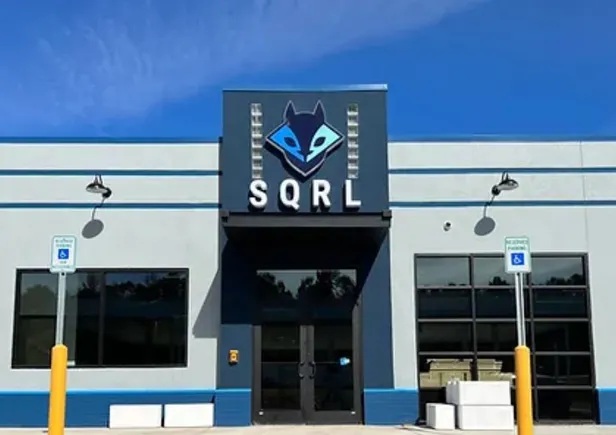
In April of this year, Jamal Hizam, CEO of Gas Hub LLC, met with several new landlords in Chicago about a week after acquiring nearly 400 SQRL gas stations to discuss the future direction of these convenience stores. However, over the past few months, most of these locations have closed for unknown reasons.
"We asked the landlords to give us a few weeks to assess the condition of the stores and the path forward, and they agreed," Hizam said in a statement to C-Store Dive. "We provided them with information about closed stores, red-tagged tanks, permits, and labor issues."
According to two landlords who attended the April meeting, Hizam's plan was not clear. One landlord recalled that he had expected Hizam to say he was working with fuel suppliers to bring in dealers to operate the stores and help restore operations.
But that was not the case. According to this landlord, who owns about 10 SQRL convenience stores (now with terminated leases), Hizam instead told them he planned to revive all SQRL convenience stores on his own within about a month.
"He said, 'No, I'm going to operate all 400 stores myself—just me and my family, we'll move in and operate, and get everything done within 30 days,'" the landlord said.
The landlord said Hizam did not disclose his financial situation or details on how he would open so many stores in such a short time. As of press time, Hizam had not responded to requests to verify the details of the meeting.
"If Chevron came to us and said they could operate and open 400 stores in two weeks, a month, or six months, we would also be somewhat skeptical and nervous," the landlord said.
SQRL Holdings made waves in the convenience store industry last October when it acquired 210 stores from Blue Owl Capital (stores previously leased to bankrupt retailer Mountain Express Oil). SQRL founder Blake Smith had publicly stated that the company planned to reach 500 stores by the end of 2024.
But over the past few months, SQRL Holdings has faced numerous legal disputes with suppliers, laid off hundreds of full-time and part-time employees, and has been investigated by the Department of Labor over wage-related issues.
Things seemed to improve when Smith sold SQRL Service Stations to Hizam to "resolve liquidity issues," the company said at the time.
But in mid-May, Hizam filed an involuntary bankruptcy petition, attempting to force SQRL Holdings into Chapter 7 bankruptcy over millions of dollars in overdue rent, citing "violation of the membership unit purchase agreement."
C-Store Dive interviewed six landlords for this article—each owning between 1 and 20 stores—to learn about their experiences over the past few months. Their names have been anonymized to avoid retaliation.
The landlords of these convenience stores said they are in the dark about the current state of the company and its stores, into which they have invested millions of dollars.
As the SQRL saga continues to unfold, many landlords are unsure what to do next, and some even blame themselves.
"I take full responsibility for this—I've been in business for years, and I was negligent," said a single-store landlord in Arkansas.
Early signs of trouble
Even before SQRL sold its stores to Gas Hub, its landlords were already dealing with headaches caused by the company's leadership issues.
A common issue was that SQRL stores rarely had fuel. Several landlords said that early on, Smith insisted the stations would soon have gasoline, but some never did.
"They told me my gas station had been fully renovated and the pumps were working well," said a single-store owner in Arkansas. "It turned out I didn't have any usable pumps—they were red-tagged from the start."
A landlord with 20 stores who attended Hizam's meeting also said Smith had told him the stores would eventually have gasoline, but that never happened.
"He says one thing, and then just doesn't do it," the landlord said. "We followed up and asked, 'What's really going on here?'"

A single-store landlord in Florida described SQRL's indifference to her problems as "the SQRL way." She noted that whenever issues arose, it was nearly "impossible" to get an SQRL team member to come to the store.
"And then people in the company kept disappearing—they were dropping like flies," she said. "You'd just talk to someone, and two weeks later, they were no longer with the company."
Several landlords mentioned SQRL's rent payment issues. A single-store owner in Arkansas said that since acquiring her store in March 2023, SQRL frequently paid monthly rent late.
"They always had excuses for paying rent late—switching operators, switching accounts," the landlord said.
The Florida single-store landlord said that after she bought the store, SQRL paid rent on time at first, but began paying late about six months later. By that point, she said she "had to constantly chase them for rent."
"Once they switched banks, that was the excuse for being late," she said.
Every landlord interviewed for this article said they have not received rent since March.
"As far as I know, no one received April rent, which constitutes a default under almost everyone's lease," said the landlord who terminated leases on 10 SQRL stores.
As of press time, Blake Smith, CEO of SQRL Holdings, had not responded to requests for comment on the allegations of late rent or false promises to landlords.
Gas Hub and store closures
Every landlord interviewed for this article said that since the Gas Hub acquisition, they have either terminated most of their leases with SQRL Service Stations or are seeking to do so.
In the view of many landlords, not only did the unpaid rent constitute a breach, but several other factors did as well.
"They breached the contract by not purchasing insurance, not paying property taxes, and not maintaining the gas stations," said a single-store landlord in Arkansas.
As of early May, this landlord said she hoped to terminate the lease as soon as possible.
"I think after hearing Jamal and Gas Hub's lack of a coherent plan, most landlords started terminating leases," said the former landlord who had owned 10 stores.
Blue Owl—one of SQRL's largest landlords—terminated its lease with the convenience store retailer in April because SQRL failed to pay that month's rent, violating the lease terms.
Blue Owl also accused SQRL of misusing $20 million in capital improvement funds provided, violating the lease.
"We have sent letters to Blue Owl through our attorneys informing them that we will not surrender the properties."

Jamal Hizam
CEO of SQRL Service Stations and Gas Hub LLC
Although Hizam did not respond to C-Store Dive's questions about the many landlords terminating leases amid the company's uncertainty, he did reveal that regarding the Blue Owl properties, he refused to vacate them without a formal court order.
Hizam also said that since he did not officially become the owner of the SQRL convenience stores until April 5, those rents were not his responsibility but rather the previous owner's.
"We have sent letters to Blue Owl through our attorneys informing them that we will not surrender the properties," Hizam said in a phone interview. "We will not give up the leases. We will fight... We will stay... They never responded."
Blue Owl did not respond to multiple requests for comment.
Left in the dark
For now, landlords seem to have little choice but to attempt to terminate their leases (if they haven't already). Once done, they must decide what to do with their properties—which remains emotionally distressing for some.
A single-store landlord in Wisconsin said she did not fully understand the situation when she acquired the store. Specifically, she said she never saw the property before buying it and was not at all involved in day-to-day management after it began operating.
Since early April, when the store manager contacted her to say the store had suddenly closed and inventory was cleared out overnight, she has been trying to cope.
"I should have been more careful," she said. "I should have gone to inspect the site."

A single-store landlord in Arkansas said that when she acquired the store for over $1 million, she thought she was investing in another stable income stream that would allow her to retire within the next decade.
Like other landlords interviewed for this article, she has asked SQRL questions multiple times over the past month. Company representatives told her to contact Hizam, but she said Hizam has not responded to her.
"They don't reply to my emails, they don't talk to me, and they don't call me," she said.
As of press time, it remains unclear how many SQRL convenience stores are operating. On May 16, Hizam said in a text message to C-Store Dive that 76 SQRL stores were in operation.
The landlord who had owned 20 SQRL stores said he wants to find an operator who can properly run his convenience stores. As of mid-May, this landlord said he had recently sold half of his stores and had 10 remaining.
But he noted that finding new operators for these stores is not easy, because given everything that has happened with the SQRL stores, he is having difficulty getting gasoline for the pumps.
"I called my fuel supplier in Arkansas and asked if he could come and fuel up, and he said: 'I don't want to touch this. Call me when it's all over.'"