
Convenience Store 2.0: How Technology Reshapes Key Design Strategies
New technologies such as self-checkout, ordering kiosks, digital media, and even floor-cleaning robots are bringing convenience stores new opportunities to attract foot traffic and boost revenue and efficiency. However, industry design experts point out that introducing equipment is far more than simply placing it; it requires careful planning around customer flow, brand alignment, and potential drawbacks.
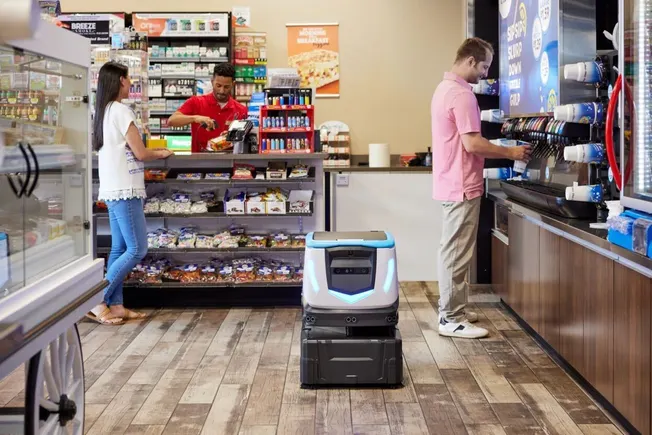
New technologies such as self-checkout, food ordering kiosks, digital media, and even floor-cleaning robots are bringing convenience stores the potential to attract new customers, create new revenue, assist employees, and improve operational efficiency. These innovations are expected to help convenience stores build an advantage in a competitive market and make the in-store shopping experience faster and more convenient.
However, convenience store operators cannot simply purchase a technology, place it in the store, and expect it to improve business and be readily accepted by customers. Convenience store design experts point out that integrating new equipment into a store requires careful planning and consideration.
The starting point for deciding what technology to purchase and where to install it is to clarify customer traffic flow and think about which technologies can benefit each store. Then, it is necessary to find a suitable location in the sales floor for the new equipment, ensure it fits the brand positioning, and anticipate any potential drawbacks it may bring.
Carsten Brase, retail consulting director at Ohio-based retail technology company Diebold Nixdorf, said that when convenience store clients seek to deploy new technology, the company first asks what problem they are trying to solve with that technology. For example, Brase noted in an email, are they looking to reduce queues? Free up employees? Or improve the customer experience? "Understanding the answer to this question will determine the direction of the technology solution," Brase said.

Understanding customer traffic flow
Mike Lawshe, president of retail design and consulting firm Paragon Solutions, said the first step for retailers to determine what technology to integrate and how it fits into the overall layout is to understand customer needs and their traffic flow in the store. Convenience store operators should consider the main reasons customers enter the store. Is the store located along a high-traffic interstate? Or is it in a town where people are more likely to grab items from the cooler?
Lawshe gave an example: travelers stopping at an interstate convenience store are likely to buy a snack or a cup of coffee for the road after leaving the restroom. "You design the store to guide customers along a natural traffic path, past the areas you believe will generate the most impulse purchases and have the greatest impact," Lawshe said.
Brase added that understanding customer traffic flow helps stores ensure that technology is placed in a location that "adds value for the consumer, while also being easy to manage the process from the employee's perspective."
Finding the right technology
Jeff Lenard, vice president of strategic industry initiatives at NACS, said in an email that when integrating any new technology, the focus should be on how it improves customer service, not just on how it reduces costs. Lenard said cost control is crucial for convenience stores due to higher operating costs. But he added that convenience stores also face numerous convenience-based competitors, so any new technology must deliver clear benefits to customers and must not inadvertently weaken their market advantage.
"If you are known for great interaction between employees and customers, how do you reflect that in a purely machine-based transaction?" he asked.
Brase said convenience stores should analyze their size and profile, then review a range of operational processes, such as their customer base, shopping and payment habits, and peak hours. He added that this analysis will ultimately determine the most sensible technology solution.
Lenard pointed out that the challenge for convenience stores when integrating new technology is that, although new things may enhance the experience and delight customers, they do not want to introduce them prematurely on the adoption curve, that is, before they have been proven in an active operating environment.
"Ask your suppliers how the technology works specifically in a store, and get as many examples as possible," Lenard said, adding that by doing so, retailers may also gain new ideas to consider.

The right spot on the sales floor
Lawshe said convenience stores should "lead with new technology and embrace it," allowing customers to see technologies such as food ordering kiosks as early as possible each time they enter the store. That way, they have the opportunity to use it before adopting more traditional shopping methods.
Brase said this means placing self-order kiosks near the entrance, so that after customers make their choices, they might sit in the store's quick-service restaurant area. But he added that these kiosks still need to be close enough to the counter to make it easier for employees to assist customers with different requests or resolve order issues.
Lenard believes the optimal spacing between self-checkout and other areas will vary depending on the store and its existing layout. "These decisions are best made after communicating with potential suppliers about the goals for launching self-checkout," he said.
Lawshe said convenience stores should place self-checkout areas in a special zone separate from traditional checkout lanes, but still in a location customers must pass. Lawshe said stores should make these self-checkout kiosks more attractive and have staff on standby, ready to interact with customers and provide assistance.
Considering potential drawbacks
There are also drawbacks to consider when integrating technologies such as ordering kiosks. Brase said that because kiosks are efficient and can increase the number of order points in the store, they may shift the bottleneck in food service from the ordering stage to the service and food preparation stage, potentially causing inconvenience to customers.
Jim Richards Sr., head of the Midwest office at PES Design Group, said he has not yet seen the impact of kiosks on the customer experience, but he worries they might cannibalize sales in other areas of the store. He said if customers can simply order what they need at a kiosk and check out upon entering, they will not walk around other parts of the store, reducing opportunities for impulse purchases.
"We lay out stores specifically to generate a lot of impulse purchases," Richards said. Coolers are usually placed at the back of the store because they are among the most frequently used areas, a layout that forces customers to pass shelves stocked with food and other items on their way to grab a drink and then return to the checkout. "Setting up kiosks, to some extent, takes away that function of the store," he said.
Lenard said theft at self-checkout can also be a concern. Convenience store chain QuickChek places its self-checkout kiosks near staffed lanes to better supervise self-checkout and allow employees to quickly verify customer ages for age-restricted products, Lenard said.
Additionally, Lawshe said that when installing digital media and screens in the store, operators should be careful to avoid making customers feel uncomfortable and want to leave due to "sensory overload."

Considering brand factors
Richards said digital displays are "great," "especially showing product images and signage on the street outside the store, which can attract people in." Richards has seen beverage equipment that uses video screens to show drinks being poured or burgers being grilled, making them look appetizing and drawing attention.
But Lawshe said any digital media in the store needs to point to the convenience store's brand. He said suppliers often try to place signage and digital media in and around the store promoting their products. Lawshe said when customers see a display ad for a specific energy drink at the door, they might enter the store to buy that drink. But in the end, the store does not sell more energy drinks; it just shifts sales toward one brand. Stores should instead promote how they sell energy drinks that meet customer needs, he said.
"Influence your customers with quality digital media that attracts your brand," Lawshe said. "You are not trying to sell Snickers or Monster. You will sell those, but what you want to sell is what sets you apart, what makes you stand out from the competition."
On the other hand, Lenard said digital screens can also allow retailers to show customers not only what they sell, but also to convey what they mean to the community by telling their own story and showcasing the community groups they support.
Beyond the technology itself
New technology can help keep stores clean and reduce the burden on employees, but simply adding technology does not mean it will be effective. Retailers need to ensure the store layout can properly accommodate it and that customers will actually embrace it.
If convenience stores use automatic floor scrubbers like those piloted by Kum & Go andRaceTrac,they need to design the space so the machine can clean the entire store—meaning aisles need to be wide enough and floors need to be kept clear.
"When designing, remodeling, or building a new store, think about what tools your employees need to do their jobs well?" Lawshe said. "Design around your technology."
Lawshe said installing technology in the right place is just a starting point. "You have to attract customers, you have to get customers to adopt it." Lawshe added that kiosks, after all, cannot do everything for the store. There needs to be customer service staff on the sales floor, teaching people how to use the technology and explaining why they should use it. He said retailers could even entice people to use it by offering free coffee or a discount on their next visit.
"If you do not give them a reason, do not explain it to them, do not attract them, then they will not use it," Lawshe said.