
EG America sale rumors could reshape the U.S. convenience store industry
British convenience store giant EG Group is considering selling its U.S. assets to reduce debt, a move that could trigger a shift in industry power, a decline in store numbers, and a bidding war.
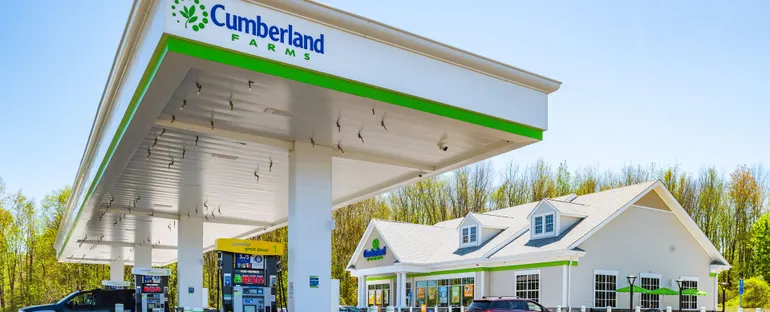
Over the past few weeks, there have been reports that convenience store giant EG Group, headquartered in Blackburn, UK, may be considering selling its assets in the United States to ease billions of dollars in debt pressure. The company operates in the U.S. under the name EG America.
EG Group suddenly entered the U.S. market in 2018 when it acquired a network of 762 convenience stores from Kroger. Five years later, it has grown into one of the largest convenience store operators in the U.S., running nearly 1,800 convenience stores and gas stations under multiple brands.
Although reports are still speculative at this point, EG has hinted that action may be taken. In its most recent quarterly trading update, the company said it is "committed to reducing total net leverage through debt reduction and free cash flow generation, and the group is actively exploring deleveraging options."
If EG America's convenience store assets, spread across 33 U.S. states, were sold, it would inevitably cause a huge ripple effect throughout the industry. Experts say this could include further consolidation of power among industry leaders, a decline in overall store counts, and bidding wars over EG's assets.
Sale-and-leaseback rumors heat up
Early reports indicated that if EG sells its U.S. assets, any deal would likely be structured as a sale-and-leaseback. This means EG would find a buyer and then lease back the stores, essentially becoming a tenant. In this scenario, the stores themselves would not change at all—EG just would no longer own them.
For EG, a sale-and-leaseback could allow it to continue operating without owning the stores while raising capital.
Sale-and-leasebacks are not new in the convenience store industry, with retailers often "retaining land ownership and leasing retail space," or vice versa, depending on whether they are in expansion mode or focused on retaining real estate, said Peter Rasmussen, founder and CEO of convenience store consulting firm Convenience and Energy Advisors.
"Many retailers do both," he said.
In 2016, convenience store retailer Global Partners LP reached a $67 million sale-and-leaseback agreement with a real estate investor involving 33 sites in New England. At the time, Global Partners President and CEO Eric Slifka said he expected the proceeds from the deal to "reduce debt and provide financial flexibility for reinvestment and expansion of the business."
Experts say if EG Group does a sale-and-leaseback on its U.S. stores, it would likely be for a similar purpose.
"If you own all your sites, own the land you operate on, you carry more debt and expansion is more difficult," Rasmussen said. "If you lease, especially as part of a large development project, then you have the opportunity to grow your store count faster."

If EG Group decides to do a sale-and-leaseback on its U.S. sites, it would not be an attractive acquisition opportunity for other convenience store companies, as they would likely prefer to invest their capital in their own stores and control operations, said Steve Montgomery, president of convenience store consulting firm b2b Solutions.
While it could be attractive to large banks or private equity firms, Montgomery said he cannot foresee any retailer wanting to become the landlord to a retailer the size of EG Group.
"There's no benefit," he said. "You just end up being their landlord. Who cares?"
Who could the potential buyers be?
If EG Group directly sells its U.S. stores, who would be the buyer?
Rasmussen said it depends on whether EG sells all its stores in one package or splits them among multiple companies. Montgomery noted that a split sale seems more likely, as the original Sky News report mentioned a "sale-and-leaseback deal" rather than a single transaction.
While private equity firms or banks could be options for a full acquisition, if a convenience store retailer wanted to buy EG's U.S. sites, Montgomery believes it would have to be one of the two largest players in the U.S. market, as only they could afford an acquisition that could reach billions of dollars.
"If they're going to sell, who has that kind of money to buy?" he said. "As far as I know, no convenience store company could buy it all except Circle K or 7-Eleven."
History may point to Couche-Tard—Circle K's parent company—as a candidate for a full acquisition, as the retailer was in merger talks with EG Group last April. The deal ultimately fell through for undisclosed reasons.
"Someone I spoke with said they would bet on Circle K," Montgomery said.
Todd Jenney, partner at convenience store consulting firm Business Accelerator Team, also believes 7-Eleven and Circle K would be among the convenience store retailers capable of purchasing EG Group's U.S. assets. But he also noted that "big oil companies" cannot be ruled out if these retailers "decide to get in the game."
While many oil majors are not known for convenience stores, some are increasing their investment in retail operations. For example, after selling about 700 company-operated convenience stores in 2007, BP fully acquired Midwest chain Thornton's in August 2021 and brought its Ampm convenience store brand to New York City last summer.
"Any of these companies already have a significant presence in the markets where EG operates," Jenney said.
But if EG Group does decide to split its U.S. assets among multiple companies, Montgomery expects significant interest from both within and outside the industry.
"If they start selling, if they actually sell the properties... maybe there will be a small bidding war," he said.
What does this mean for EG Group?
EG Group's rapid rise in the U.S. has been one of the core storylines in the convenience store industry over the past five years. In early 2018, EG Group operated no convenience stores in the U.S. Today, its nearly 1,800 stores make it the fourth-largest chain in the country by store count.
Jenney said that with its rapid acquisition strategy, EG may have known from the start that it would eventually sell its U.S. convenience stores. He noted that over the years he has observed a trend: some companies make large acquisitions and then flip them shortly thereafter.
One example: In 1996, Circle K was acquired by oil refiner and marketer Tosco Corp. for $900 million, but was sold to Phillips Petroleum five years later for $7.5 billion. Just one year after that, Couche-Tard acquired Circle K. Additionally, in 2014, natural gas company Energy Transfer Partners acquired Susser Holdings—former operator of Stripes Convenience Stores—for $1.8 billion, only to resell those assets to Sunoco LP a year later.
"I think if you look over the years at companies that acquire stores at that pace, selling them is usually their end goal," he said.

Looking ahead, Jenney said he is curious whether this means EG intends to exit the U.S. convenience store market entirely, or might explore another acquisition.
"If it's successful for them, they might try to do another similar acquisition and sell it in the future," he said.
Rasmussen also said he was not surprised by the news, but for a different reason. He noted that EG selling its U.S. assets shortly after acquiring them could simply be "a sign of the times in a rising interest rate environment."
"They expanded rapidly in store count, but like everything, some people want to start or acquire a business and hold it for generations, while others want to buy, sell, and differentiate based on timing," he said.
Montgomery, meanwhile, is more curious about why EG might sell its U.S. sites. He pointed to the company's recent trading update, which showed that the success of its U.S. division offset "weak UK trading" during the same period.
"If U.S. stores are boosting your performance—then why would you sell them?" Montgomery said.
This brings it back to EG Group's debt problem. The Sunday Times reported that about $8.6 billion of its debt is due in 2025.
So far, EG's path to growth through acquisitions has been "primarily debt-financed," said Bryan Roberts, global insights leader at UK research firm IGD. While that is not a problem in itself, it can become one in a rising interest rate environment. Selling EG's assets could "be a way to pay down debt directly," he said.
Montgomery also noted that the lack of consistency among the various brands within EG's U.S. network could be causing the company some near-term headaches.
Although the retailer previously announced it would expand the SmartPay Rewards platform used by Cumberland Farms to all its stores in North America—and began converting its Tom Thumb convenience stores to Cumberland Farms locations last year—Montgomery believes that a company operating so many brands makes it difficult to keep track of the "non-customer-facing" aspects of the business, which could create friction.
"Unless everything is integrated, you're running a bunch of different companies—that's very difficult," he said.
As for the impact EG selling its U.S. assets could have on the rest of the convenience store industry, Jenney said on a basic level, it would lead to a decline in the national store count—a number that just broke a four-year downward trend.
"Anytime there's a sale of this magnitude, there will always be some stores that disappear entirely," he said. "If they have good real estate, it could be used for other purposes."