
Four Strategies Gas Station and Convenience Store Brands Can Learn from Foodservice Innovation
As convenience stores and gas stations compete head-on with fast-food brands, they are rapidly adopting innovative strategies from the foodservice industry. Based on observations by Judy Chan, Chief Marketing Officer of Bluedot, this article analyzes key initiatives such as contactless payment, mobile ordering and pickup, loyalty programs, and data analytics, and cites data from NACS and Bluedot reports to show how these strategies help convenience stores reduce customer attrition, boost loyalty, and expand market share.
The following is a contributed post by Judy Chan, Chief Marketing Officer at Bluedot (customer arrival platform).
Foodservice has become a key battleground for convenience stores (c-stores) to attract more customers, with many brands accelerating innovative initiatives, adopting strategies taken almost directly from the playbook of quick-service restaurant (QSR) chains. Similar to QSRs and even fast-casual brands, some convenience stores are moving beyond hot dogs and pizza, introducing new food concepts such as fresh, made-to-order offerings. As clean ingredients become a trend, customizable stacked bowls, wraps, and bowl meals will gradually become the norm.NACS reportsshow that prepared food sales grew by 25.9% in 2021. We are already seeing convenience stores offering mobile ordering and delivery through third-party apps as a "pit stop" option; some locations are even beginning to offer drive-thru and curbside pickup services.

These efforts appear to be paying off. According to the Convenience Experience Report, nearly six in 10 consumers today consider convenience stores as equal alternatives to QSRs when they need fast food. RecentNACS reportsdata shows that total convenience store foodservice sales grew to 24.1% in 2021, accounting for 35.5% of in-store gross profit. Convenience stores are also elevating their service standards through digital strategies, making the process of refueling or grabbing an extra-large soda easier, safer, and of course more convenient.
Convenience stores and gas stations are entering a new era, beginning to compete head-on with QSR brands. Below are overlapping strategies and initiatives that convenience store brands should prioritize.
Contactless Payments
Initially driven by safety needs, the pandemic significantly accelerated the adoption of contactless payments across multiple industries, especially foodservice and retail. Some locations have even shifted to fully cashless models.
Whether at the fuel pump or in-store, contactless payments offer convenience stores an immediate way to eliminate friction and significantly reduce payment time. The easiest payment options to offer include contactless credit cards (where consumers can use tap-to-pay at the point of sale) and mobile wallets such as Apple Pay or Google Pay. Bluedot's recently releasedConvenience Experience Reportshows that 83% of consumers are concerned about credit card fraud risk at the fuel pump and prefer not to insert their card to pay. To address this, 34% of consumers want to store payment information in a gas station mobile app, 28% use tap-to-pay credit cards, and 23% use Apple Pay, Google Pay, or Samsung Pay.
Brands can also offer self-checkout through their own mobile apps, allowing consumers to scan items and complete payment on their phones. This is not only faster and more convenient for customers, but also reduces in-store labor requirements.
Mobile Ordering and Pickup
Over the past two years, consumers have relied heavily on mobile apps for ordering, and this momentum shows no signs of slowing. According to the latestState of What Feeds Us report, in the foodservice industry, the majority of consumers continue to download new restaurant apps and place more mobile orders. Consumers also prefer convenient pickup options such as drive-thru, curbside pickup, and in-store pickup.
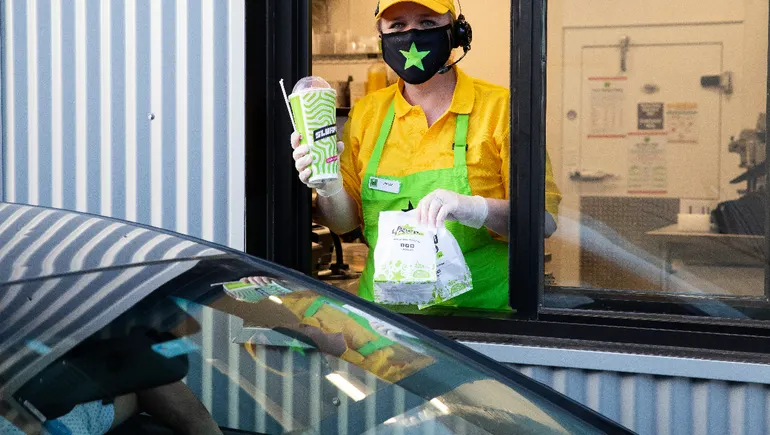
There is significant demand for mobile ordering, drive-thru, and curbside pickup in the convenience store and gas station industry. The latest Convenience Experience Report shows that if these options were available, six in 10 consumers would visit convenience stores more frequently. Some convenience store and gas station brands, such asWawa, have already opened drive-thru-only locations; while brands like Casey's General Stores, Cumberland Farms, and QuickChek have implemented curbside pickup.
Mobile ordering and designated pickup areas provide convenience stores with the opportunity to offer a higher level of convenience, allowing consumers to skip lines or even avoid entering the store entirely, while boosting customer satisfaction, engagement, loyalty, and revenue.
Loyalty Programs and Customer Engagement
Equally critical for today's convenience store brands is combining loyalty programs with mobile apps to drive engagement and retention. Fuel discounts are the top reason consumers download and keep a gas station app, but the majority of consumers (54%) mistakenly believe they must sign up for a gas station credit card to enjoy fuel discounts. Additionally, three-quarters of consumers say they would join a fuel loyalty program if it were free, and 58% say they would join if the program were not tied to a credit card.
Instead, brands should focus on meeting customers' individual needs through personalized offers and deals, whether it's a buy-one-get-one drink special or a per-gallon discount at the pump.
Brands should also consider incorporating gamification elements into their loyalty programs. Gamification enables brands to customize game experiences, further boosting loyalty, engagement, and app downloads. Brands like Circle K and Stinker Stores have already begun implementing gamification elements. Stinker's gamification solution launches new games weekly and allows customers to earn digital stamps through purchases to win prizes.
Data Analytics
Mobile apps and loyalty programs provide brands with a wealth of actionable data for analysis and for developing data-driven operational and marketing strategies. These valuable metrics include dwell time, which measures when customers visit, how long they stay, and whether they order in-store or at the fuel pump. Restaurants and retailers use physical journey data to make more informed decisions regarding menu offerings, staffing, supply chain, and more.
Whether at the fuel pump or in-store, customer attrition is a challenge. Even with short lines, consumers may leave. Nearly half of consumers say they would walk out of a convenience store if one to two people were queued at the register; one-third say they would drive away if just one car were queued at the fuel pump.
Armed with these insights, convenience stores can drive operational decisions to reduce queues and long wait times that might deter drivers.
The future of convenience stores is exciting, as brands continue to invest rapidly in innovation, especially mobile strategies that deliver speed and convenience. Like foodservice brands, those convenience stores that deliver exceptional customer experiences will be better positioned not only to stand out from the competition but also to expand market share.