
Hard seltzer opens a new track, can canned cocktails sustain long-term growth momentum?
Hard seltzer once disrupted the alcohol industry, and the canned cocktail market it spawned has now expanded to diverse products such as hard tea and whiskey cola. In 2023, sales of ready-to-drink cocktails made with real spirits grew 26.8% to $2.8 billion. However, traditional malt-based hard seltzer sales have declined since their 2021 peak, with brands shifting toward spirit-based products. Experts point out that category evolution is driven by consumer preferences but may cannibalize traditional spirits sales.
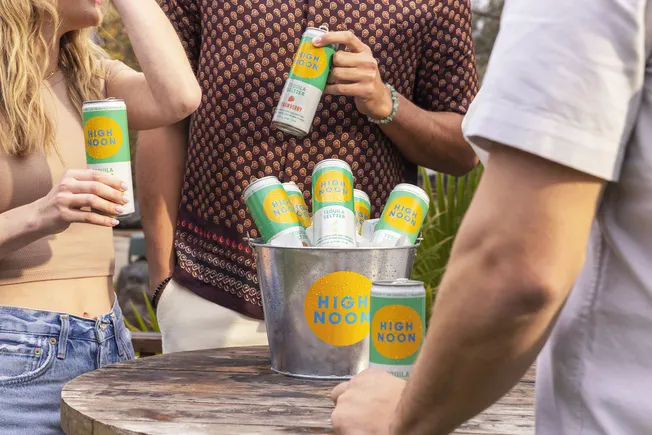
The rise of hard seltzer in the late 2010s disrupted the alcohol industry, with brands like White Claw and Boston Beer's Truly quickly gaining popularity through 12-ounce cans of sparkling alcoholic beverages. Since then, the canned cocktail category spawned by hard seltzer has expanded into a larger ecosystem—from hard tea to drinks mixing whiskey, vodka, and Coca-Cola soda—with producers betting that ready-to-drink (RTD) beverages are not a passing fad.
Spiros Malandrakis, head of alcoholic drinks research at Euromonitor International, believes the RTD canned cocktail category continues the lineage of past alcohol trends, such as the wine coolers of the 1990s. He believes that as trends evolve, these drinks will continue to transform, attracting consumers who in the past would have chosen cheaper beer and wine at parties.
"The timeline has become shorter because everything moves faster than before, and now we are entering the latest phase—spirit-based cocktails—which I think will last longer," Malandrakis said. "This won't be the last change because there will be more. That's the nature of things."
As consumers become more familiar with canned cocktails, demand for higher-end alternatives is also growing. According to data from the Distilled Spirits Council of the United States, sales of RTD cocktails made with real spirits like vodka grew 26.8% in 2023, reaching $2.8 billion.
Malandrakis noted that the growth of canned cocktails is occurring against the backdrop of a "great convergence" in the beverage industry—driven by Gen Z purchasing trends—where traditional category boundaries are blurring, and new products often fit different or overlapping consumption occasions.
Meanwhile, sales of traditional hard seltzers made with cheaper malt alcohol have declined after peaking in 2021. This has impacted brands like Boston Beer's Truly, which launched a tequila seltzer earlier this year to adapt to the change. White Claw, the best-selling hard seltzer brand, also launched its own tequila seltzer this year with unique flavors such as mango tamarind and lime cactus.
Matt Hughes, operating partner at beverage incubator Franchise Equity Partners, said the RTD category continues to attract new consumers seeking novel flavors, especially those that feel familiar and fill a gap.
During his time at Coca-Cola, Hughes helped push Topo Chico into the hard seltzer space, with the product launching in 2021. "Many Topo Chico fans were already using it in alcoholic settings, so when Coca-Cola partnered with Molson Coors to launch the product, it made perfect sense to consumers."

Spirit-driven growth
Although malt-based hard seltzers are often associated with younger college-age drinkers, the category has also attracted older consumers seeking premixed drinks made with real tequila or vodka that evoke the premium cocktails found in bars.
High Noon—which produces hard seltzers made with vodka and tequila, real fruit juice, and no added sugar—has seen significant growth in recent years among consumers seeking real spirit bases and fewer additives.
Britt West, executive vice president at High Noon parent company Spirit of Gallo, said 57% of the company's sales growth comes from consumers switching from beer and other hard seltzers. But the company strives to remain adaptable. She mentioned that the growth of RTD hard tea prompted the company's decision to launch High Noon Vodka Iced Tea this summer.
"The hard seltzer category was born from shifts in consumer preferences, so as more brands enter, it's not surprising that the category landscape evolves with growth," West said. "We look forward to continuing to closely monitor consumer trends so we can innovate quickly and provide hard seltzers that meet their needs."
Coca-Cola's canned cocktail strategy reflects the shift toward spirit-based drinks. Last year, it partnered with Brown Forman to launch Jack Daniel's Coca-Cola. Earlier this year, it partnered with Pernod Ricard to launch a Sprite and Absolut co-branded drink in Europe.
For new brands looking to stand out in the RTD alcohol space, Hughes said brands that capture the zeitgeist can achieve niche success, especially local brands that build larger fan bases. He cited Surfside as an example—a vodka-based hard tea and lemonade brand that built local traction in Pennsylvania and New Jersey before launching nationally this summer.
"They got the liquid right, and the visual identity is right," Hughes said. "The brand story is also well told, and now they are expanding rapidly nationwide."
But Malandrakis noted that one negative effect of canned cocktail growth is the potential cannibalization of traditional spirit sales.
"In the past, many of these products were positioned as adjacent to beer, so there was always the question of whether they would hurt beer or attract new consumers," Malandrakis said. "If you now have a premixed vodka cocktail in hand, you are less likely to go buy a bottle of vodka."